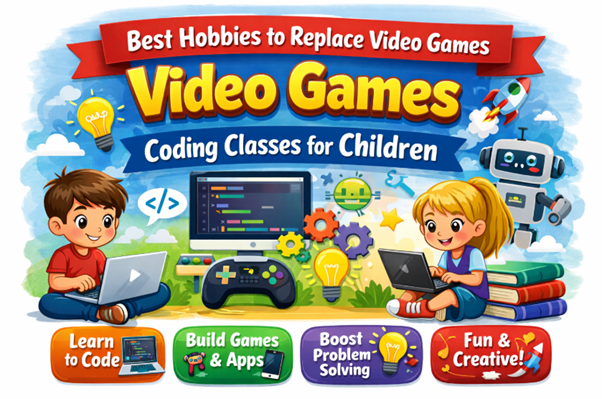
Video games have become a major part of children’s daily routines. While occasional gaming can be entertaining, excessive screen time often leads to reduced physical activity, shorter attention spans, and limited creative development. Many parents today are searching for meaningful hobbies that not only engage children but also help them build real-world skills. One of the most productive and future-ready alternatives is coding.
As technology shapes nearly every industry, learning to code at a young age offers children a powerful advantage. Instead of spending hours passively consuming games, children can actively create, problem-solve, and innovate. This is why coding classes for children in India are increasingly being recognized as one of the best hobbies to replace video games.
Why Replacing Video Games with Skill-Based Hobbies Matters
Children naturally gravitate toward activities that are interactive and rewarding. Video games fulfill this need through levels, challenges, and instant feedback. However, they rarely translate into long-term skills. Skill-based hobbies, on the other hand, provide similar engagement while contributing to a child’s intellectual and emotional growth.
Replacing excessive gaming with structured hobbies helps children:
- Improve concentration and patience
- Develop logical and analytical thinking
- Boost creativity and imagination
- Gain confidence through achievement
Among various options like music, art, and sports, coding stands out because it combines creativity with logic and prepares children for a technology-driven future.
Coding as a Modern Hobby for Children
Coding is no longer limited to adults or computer scientists. Today, it is taught in a fun, interactive, and age-appropriate manner. Children learn to write simple programs, build games, animate stories, and solve puzzles—all while developing essential thinking skills.
Unlike video games, coding turns children from consumers into creators. They don’t just play a game; they learn how the game works and how to build one themselves. This shift in mindset is one of the most valuable benefits of enrolling children in coding classes for children in India.
Cognitive and Educational Benefits of Coding
Coding supports academic performance by strengthening skills that apply across subjects.
1. Logical Thinking and Problem-Solving
Coding teaches children to break down problems into smaller steps. This structured thinking improves performance in mathematics, science, and even language comprehension.
2. Creativity and Innovation
Contrary to the belief that coding is rigid, it is highly creative. Children design characters, stories, apps, and games, expressing their imagination through technology.
3. Focus and Discipline
Writing code requires attention to detail. A single mistake can change results, teaching children persistence and careful thinking—skills often weakened by fast-paced gaming.
Ideal Age to Start Coding
Children can start coding as early as 7 or 8 years old using visual and block-based platforms. As they grow older, they can gradually move toward text-based programming languages.
Structured programs designed specifically as coding classes for kids age 9 to 11 in India focus on building strong foundations. At this stage, children are curious, capable of logical reasoning, and eager to learn new skills, making it an ideal time to introduce coding as a hobby.
Coding vs Video Games: A Healthier Balance
The goal is not to completely eliminate games, but to reduce dependency on them. Coding offers similar excitement—challenges, achievements, and creativity—without the negative effects of excessive gaming.
When children code:
- Screen time becomes productive
- Learning feels like play
- Confidence grows with each completed project
Parents often notice improved behavior, better time management, and increased interest in learning when coding replaces excessive gaming.
Online Coding Classes: Flexible and Accessible
With the rise of online education, coding has become accessible to children across the country. Virtual classes offer structured learning, interactive sessions, and project-based outcomes without geographical limitations.
Advanced learners can also explore specialized topics such as Java coding for beginners online in India, which introduces them to one of the most widely used programming languages in the world. Early exposure to such languages helps children understand how real-world applications are built.
Building Career Skills from a Young Age
Coding is not just a hobby; it is a future-ready skill. Children who learn coding early develop a strong foundation for careers in technology, engineering, data science, and artificial intelligence.
Even for children who choose non-technical careers later, coding enhances problem-solving, adaptability, and digital literacy—skills valuable in every profession. This is why coding classes for children in India are increasingly viewed as an investment rather than an extracurricular activity.
Confidence, Communication, and Collaboration
Coding classes often involve group projects, presentations, and peer interaction. Children learn to explain their ideas, collaborate on solutions, and accept feedback. These soft skills are essential for personal and professional success.
A well-structured coding program encourages children to:
- Take ownership of their learning
- Experiment without fear of failure
- Celebrate progress instead of perfection
This mindset shift is particularly beneficial for children transitioning away from the instant gratification of video games.
Choosing the Right Coding Program
Not all coding programs are the same. Parents should look for classes that:
- Use age-appropriate teaching methods
- Focus on practical projects
- Encourage creativity, not rote learning
- Provide mentorship and guidance
Programs designed with these principles help children stay engaged and motivated. One such initiative is offered by Rise With Tech, which emphasizes structured learning and creative problem-solving for young learners.
Conclusion
Replacing video games with meaningful hobbies is one of the most impactful decisions parents can make for their children. Coding offers the perfect balance of fun, creativity, and skill development. It transforms screen time into learning time and empowers children to become creators rather than consumers.
With the growing importance of technology, coding classes for children in India provide a strong foundation for lifelong learning and future success. By choosing the right program and encouraging consistent practice, parents can help their children develop confidence, curiosity, and critical thinking. Initiatives like Rise With Tech demonstrate how coding can become an enjoyable and rewarding hobby that shapes brighter futures.
FAQs :
1. Why is coding a good alternative to video games?
Coding engages children mentally, encourages creativity, and builds real-world skills, unlike passive gaming.
2. At what age should children start coding?
Children can start learning basic coding concepts from age 7 or 8, with structured programs for ages 9 to 11 being especially effective.
3. How does coding help in academics?
Coding improves logical thinking, problem-solving, and concentration, which positively impacts subjects like math and science.
4. Are online coding classes effective for children?
Yes, online classes offer flexibility, interactive learning, and access to expert mentors from anywhere.
5. Can beginners learn advanced languages like Java?
Yes, with the right guidance, children can gradually learn text-based programming such as Java after mastering basics.
6. How often should children attend coding classes?
Two to three sessions per week are ideal to maintain interest without overwhelming the child.
7. Is coding suitable for all children?
Yes, coding classes for children are designed to be inclusive, adaptable, and suitable for beginners with no prior experience.